2025 Year in Review

A Note from Our Co-Directors
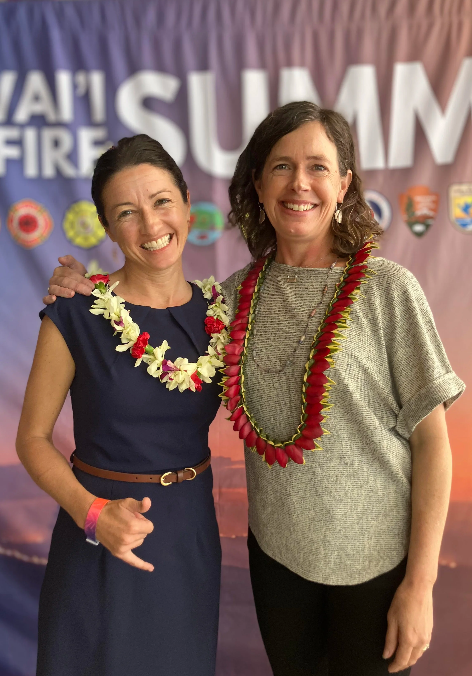
As we reflect on 2025, we are filled with gratitude.
This year’s progress belongs first and foremost to the communities, partners, practitioners, and public servants across Hawaiʻi who showed up, organized, planned, mitigated, and cared deeply for one another and the places they call home. It is a privilege to walk alongside so many people doing this work with intention, humility, and aloha.
Mahalo to our community leaders, agency partners, land stewards, funders, donors, and collaborators for trusting us to support this shared effort. And mahalo to the HWMO team for the care, integrity, and heart you bring to the work every day.
We head into 2026 with clear eyes, steady commitment, and deep appreciation for the relationships that make this work possible. Wishing you and your ʻohana a safe, restful, and hopeful new year.
With gratitude,
Elizabeth Pickett & Nani Barretto
Co-Executive Directors
Building Wildfire Resilience Across Hawaiʻi
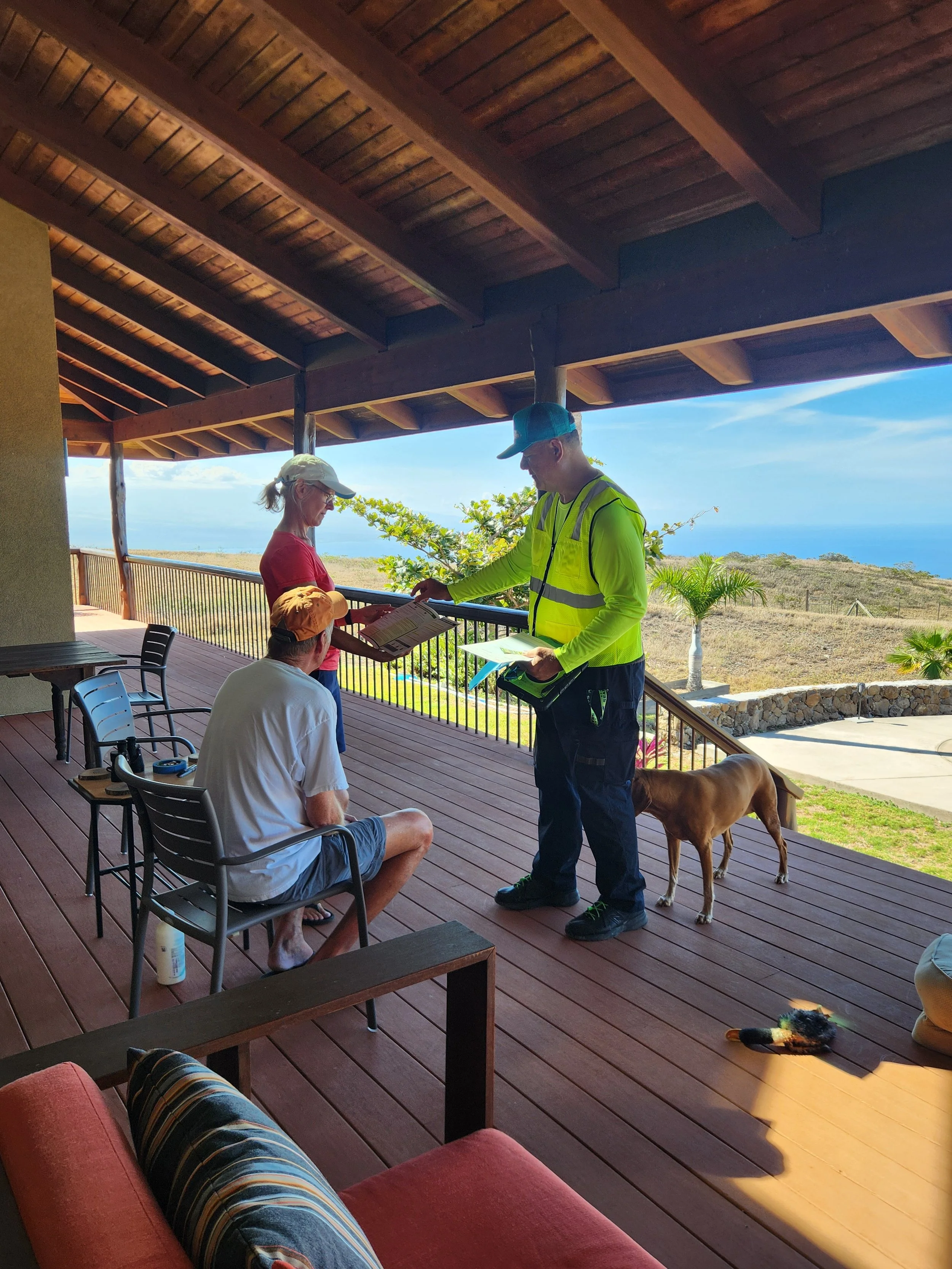
As we look back on 2025, we are deeply inspired by the amount of work Hawaiʻi’s communities, partners, and practitioners have undertaken to reduce wildfire risk across the islands. Throughout the year, residents, Firewise leaders, agencies, land managers, and local organizations stepped up to turn growing awareness into action through hands-on mitigation, planning, education, and collaboration. From individual homes and neighborhoods to regional and statewide efforts, this collective work reflects a shared commitment to building a safer, more wildfire-resilient Hawaiʻi.
Our team is grateful to walk alongside and support this work. Thanks to the dedication of our communities and partners, and the support of our donors, 2025 was a year of meaningful progress.
2025 at a Glance
Over 100 community events, trainings, and public engagements supported statewide through partnerships with communities, agencies, and local organizations
36 community-led mitigation projects coordinated by leaders from Firewise sites took place statewide during National Community Wildfire Preparedness Month
400+ community leaders, responders, land managers, and partners convened at the Hawaiʻi Wildfire Summit to share lessons learned and advance solutions
46 Firewise communities actively engaged in wildfire preparedness, mitigation, and planning efforts across Hawaiʻi, with another 11 communities in the application process
19 staff statewide, including 8 new team members added in 2025, strengthening Hawaiʻi’s capacity for wildfire planning, prevention, mitigation, fire science, and coordination
Protecting Communities on the Ground
Helping residents and neighborhoods understand and reduce wildfire risk is at the core of wildfire resilience in Hawaiʻi.
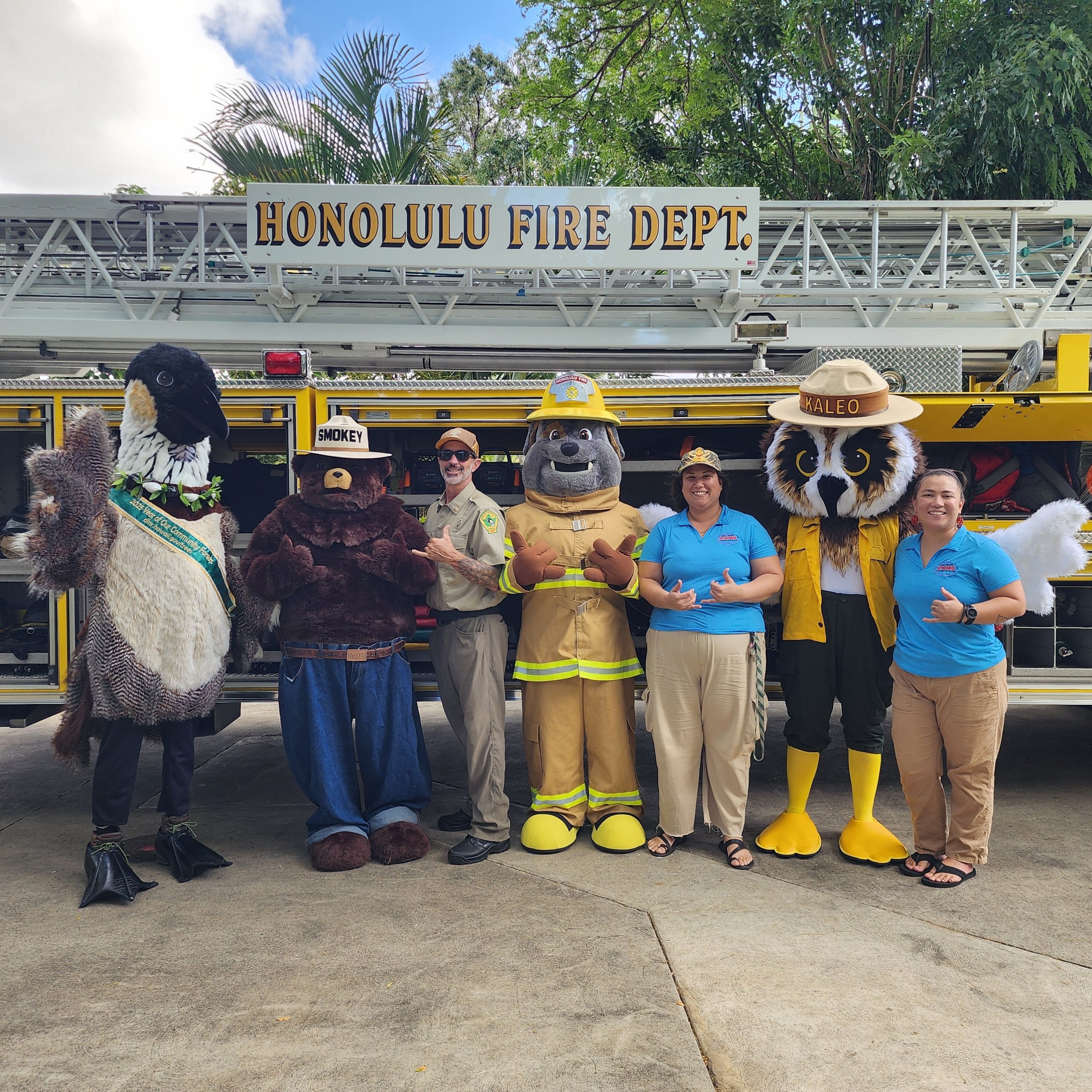
In 2025, volunteer assessors across the state completed approximately 80 home wildfire risk assessments, helping residents identify vulnerabilities around their homes, understand defensible space and home hardening priorities, and take practical steps to reduce risk before a fire occurs. Community capacity for this work also grew significantly. As part of the Hawaiʻi Wildfire Summit, residents, agency staff, and practitioners participated in a day-long Home Ignition Zone workshop led by Dr. Jack Cohen, a world-renowned fire scientist and leader in wildfire mitigation best practices. Eighty participants attended the training, including residents interested in becoming home assessors, county and state fire and emergency management personnel, and staff from the Kauaʻi Planning Department. To further support this work, HWMO adopted Fire Aside, a new home assessment platform that improves consistency, efficiency, and the usefulness of assessment data, providing clearer guidance for homeowners and communities alike.
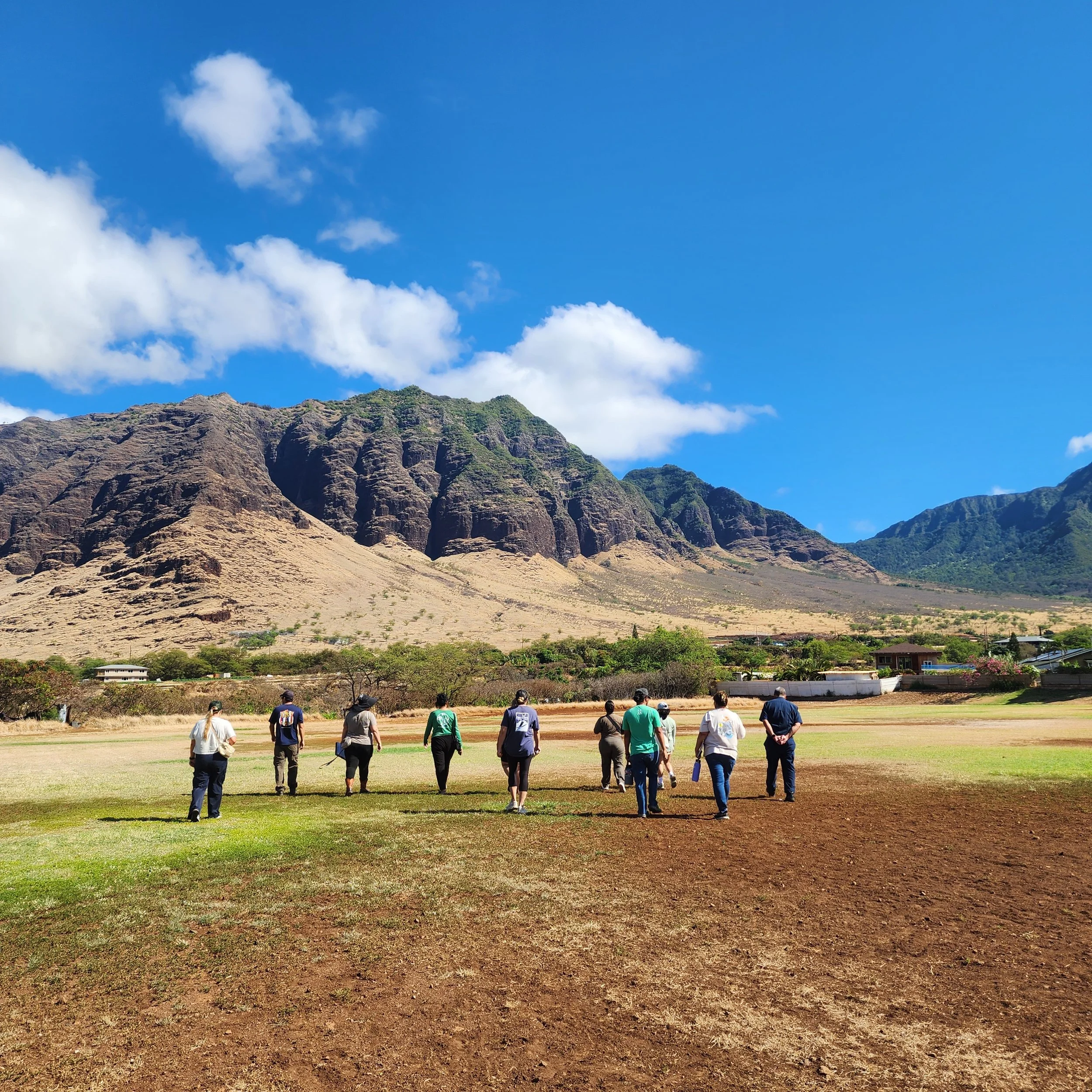
Across the islands, residents concerned about their wildfire risk took an important first step toward community preparedness by organizing themselves at the neighborhood level and reaching out for support. In 2025, 16 neighborhoods took this step for the first time, working with HWMO to convene community wildfire hazard assessments that brought together resident leaders alongside county fire departments and state forestry experts. As a result, 16 new communities completed Firewise recognition requirements, including 5 on Hawaiʻi Island, 7 across Maui Nui, and 4 on Oʻahu. Of these newly recognized sites, 3 are Hawaiian Homestead communities, reflecting growing engagement and leadership from Native Hawaiian communities in wildfire preparedness efforts. In addition, 7 existing Firewise communities completed their required five-year renewal hazard assessments, continuing their commitment to wildfire preparedness and risk reduction. Together, HWMO supported a statewide network of 46 Firewise communities in 2025, strengthening neighborhood level action to reduce wildfire risk across Hawaiʻi.
Community leaders also played a central role in turning planning into action. With HWMO support, leaders from 36 Firewise sites planned and coordinated community mitigation projects statewide, directing approximately $150,000 in community mitigation financial assistance toward fuels reduction and defensible space projects during National Community Wildfire Preparedness Month.
HWMO staff supported these efforts by showing up alongside communities at more than 100 public engagements statewide, including Ready Set Go presentations, community meetings, school and youth-focused preparedness activities, webinars, and partner events with utilities and emergency management agencies.
On Molokaʻi, residents expanded wildfire preparedness efforts in collaboration with MEMA, including community outreach and evacuation preparedness activities designed to strengthen coordination between neighborhoods and emergency services.
Launching Hawaiʻi's First Statewide Wildfire Mitigation Grant Program
In 2025, Hawaiʻi took an important step toward sustained wildfire risk reduction through a one-time legislative investment that funded the Hawaiʻi Wildfire Community Risk Reduction Grant Program. These Hawaiʻi State Legislature funds were administered by the Department of Land and Natural Resources, Division of Forestry and Wildlife (DOFAW), with HWMO supporting program implementation and coordination.
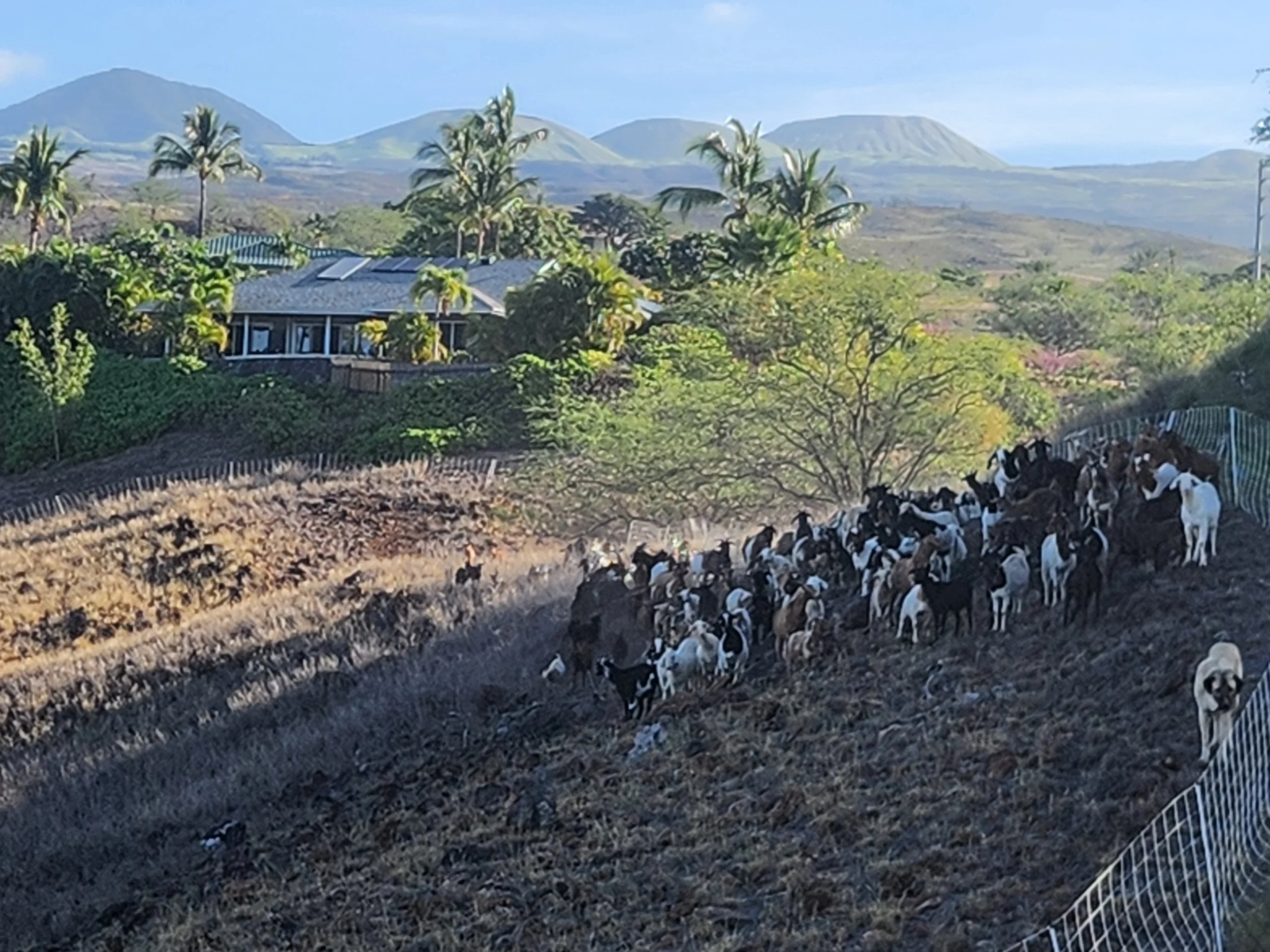
The program generated strong interest statewide, receiving 22 applications requesting a total of $4.7 million. From these, 9 projects were selected for funding based on readiness, potential impact, and alignment with wildfire risk reduction priorities. Awardees included landowners, land stewards, and community-serving organizations implementing mitigation projects in areas where hazardous fuels pose risks to nearby neighborhoods, infrastructure, and natural and cultural resources.
In its first year, the program delivered measurable, statewide impact:
Four islands supported through funded mitigation projects
Nine high-impact, shovel-ready mitigation projects currently underway
More than 12,500 acres treated through fuels reduction and mitigation work
Over 8,000 homes better protected from wildfire risk
$375,000 in matching funds contributed
Funding supported high-impact, shovel-ready projects focused on hazardous fuels reduction, wildfire prevention planning, and improvements to access and evacuation routes. Projects were implemented across multiple islands and collectively treated thousands of acres, improving safety for communities and strengthening landscape-scale wildfire resilience.
As a pilot effort, this grant program demonstrated what a state-level wildfire mitigation funding program could look like in Hawaiʻi. By pairing legislative investment with technical guidance and coordination, the program helped advance effective, on-the-ground mitigation while informing future approaches to statewide wildfire funding and implementation.
HWMO is honored to support the leaders, land stewards, and organizations carrying out this work on the ground and grateful for the trust placed in us to help coordinate these efforts.
To see what this work looks like on the ground, we invite you to watch a short video highlighting projects supported through the Hawaiʻi Wildfire Community Risk Reduction Grant Program.
Strengthening Hawaiʻi’s Wildfire System
Wildfire resilience requires more than individual actions. It requires strong systems, coordination, and planning.
In 2025, HWMO played a key role in statewide wildfire readiness efforts, working closely with state agencies to clarify roles, identify gaps, and improve coordination. Under contract with the Department of the Attorney General and with support from Governor Green, HWMO helped advance a collaborative effort to strengthen Hawaiʻi’s wildfire preparedness and develop a unified Statewide Wildfire Action Strategy.
At the county level, HWMO supported landmark wildfire planning and code efforts on Kauaʻi, contributing technical expertise to a first of its kind wildfire mitigation ordinance in Hawaiʻi. These new standards embed defensible space, vegetation management, and home hardening into land use and permitting, helping reduce wildfire risk before development occurs and setting a model for wildfire resilient planning statewide.
Advancing Knowledge, Training, and Leadership
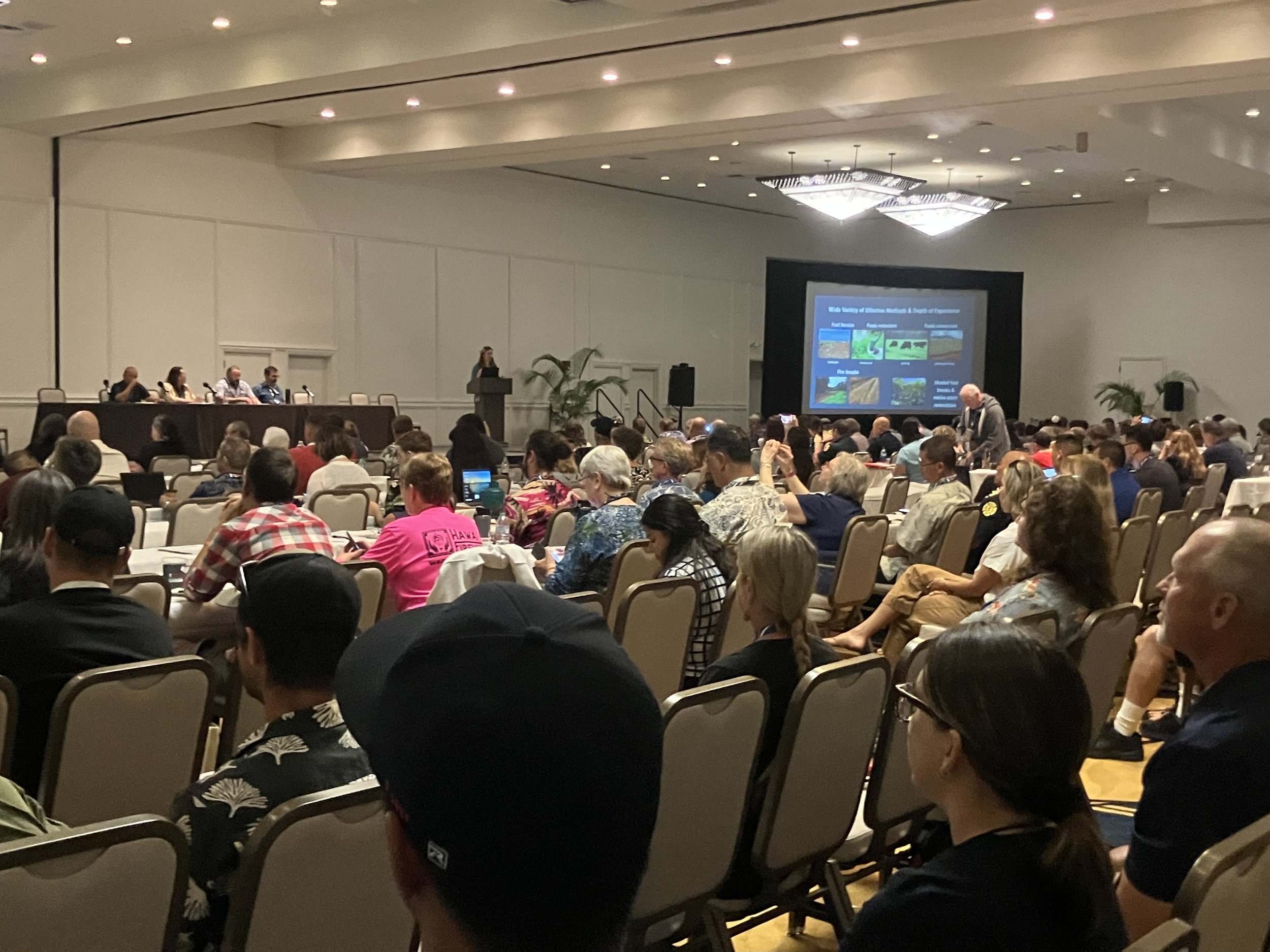
In February, HWMO coordinated and hosted the 2025 Hawaiʻi Wildfire Summit with the Hawaiʻi Fire Department, in partnership with the Department of Land and Natural Resources, Division of Forestry and Wildlife, the Maui Fire Department, Honolulu Fire Department, Kauaʻi Fire Department, and the State of Hawaiʻi Airports and Rescue and Firefighting, bringing together more than 400 community leaders, emergency responders, land managers, researchers, and policymakers from across the state. The Summit created space for shared learning, reflection, and coordination, with a focus on applying lessons learned and advancing practical, Hawaiʻi-specific solutions to wildfire risk.
As part of this work, HWMO continued to advance wildfire knowledge exchange through the Pacific Fire Exchange (PFX), a program jointly managed by HWMO and the University of Hawaiʻi at Mānoa. In 2025, this included delivering science-based guidance, professional training, and regional collaboration with partners in Palau and Guam, helping ensure wildfire decisions in Hawaiʻi and the Pacific are informed by the best available science and grounded in shared, place-based experience.
Building Capacity for the Work Ahead
As wildfire risk continues to grow across Hawaiʻi, so does the responsibility to steward the trust placed in this work by our agency partners, communities, land stewards, and policymakers.
In 2025, HWMO welcomed 8 new team members, bringing our statewide staff to 19. This growth reflects the increasing trust and reliance placed on HWMO by residents, Firewise leaders, agency partners, large landowners, and decision-makers seeking thoughtful, grounded support for wildfire mitigation, planning, education, and coordination. Expanding our team has allowed us to show up more consistently, listen more deeply, and follow through with care across diverse landscapes and partnerships.
We are deeply grateful to the communities, agencies, land stewards, policymakers, funders, and collaborators who entrust us with this responsibility, and to our staff for carrying that trust with humility, integrity, and commitment to Hawaiʻi’s people and ʻāina.
HWMO in the News in 2025
National recognition for wildfire mitigation leadership:
First of its kind wildfire code on Kauaʻi:
Firewise communities in the national spotlight:
Convening Hawaiʻi’s wildfire leaders:
Public education on wildfire resilient building: Maui Now covered HWMO hosted webinars providing practical guidance on wildfire resistant construction and home hardening.
Looking Ahead
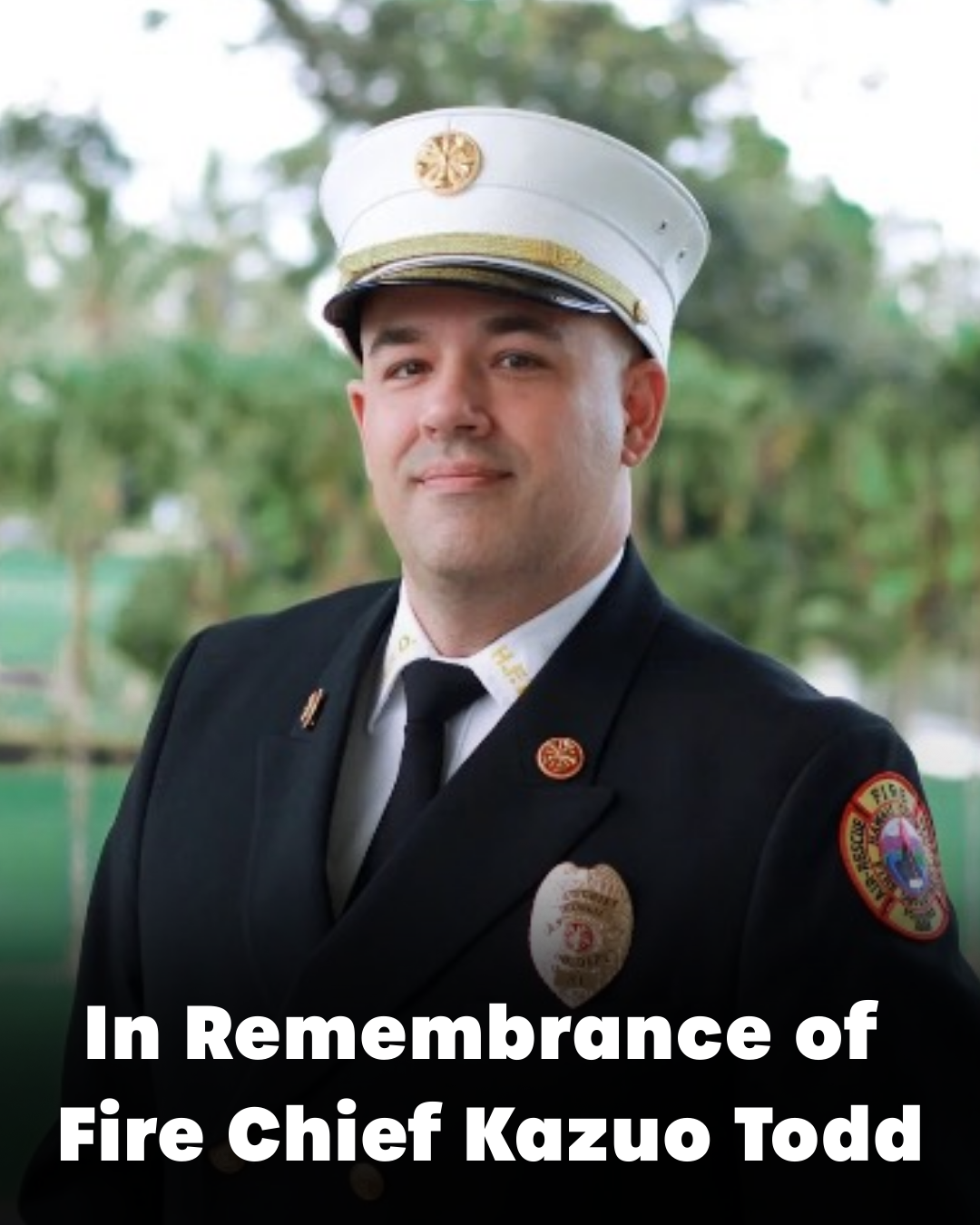
In closing, we pause with deep gratitude for the leadership, partnership, and friendship of Fire Chief Kazuo Todd, whose passing this year was felt deeply across Hawaiʻi’s wildfire and emergency management community. Chief Todd was an innovative and committed leader, a thoughtful advocate for wildfire preparedness and mitigation, and a trusted partner to HWMO and many of the initiatives reflected in this year’s work. We are honored to have worked alongside him and grateful for the care, integrity, and vision he brought to this shared effort. As we continue this work, we do so with respect for his legacy and a commitment to carry forward the values he championed, knowing that the impact of his leadership will continue to shape and strengthen wildfire resilience across Hawaiʻi.
Wildfire mitigation is ongoing work. The progress made in 2025 was possible because of sustained community leadership, agency collaboration, and strong partnerships across Hawaiʻi. As we look to 2026, HWMO will continue strengthening Firewise communities, advancing statewide coordination, expanding assessments, and supporting practical, place-based solutions that reduce wildfire risk before the next fire occurs.
We know this work cannot be done by any one organization alone. It takes neighbors organizing, land stewards taking action, agencies coordinating, and policymakers investing for the long term. We are committed to showing up as a steady partner in that shared effort.
If you believe in this work and want to support wildfire resilience across Hawaiʻi, we invite you to contribute.