Empowering Communities:
Join the Firewise USA® Movement in Hawaiʻi

The Firewise USA® Site program helps communities adapt to living with wildfire through a nationally recognized, structured framework that encourages neighbors to work together and take action to reduce wildfire risk.
In Hawaiʻi, more than 40 communities have joined the nationwide network of nearly 3,000 recognized Firewise USA® sites. These communities are taking ownership of wildfire preparedness by planning locally, educating residents, and implementing practical risk reduction measures to better protect homes and neighborhoods.
HWMO supports Firewise communities statewide in partnership with the Hawaiʻi State Division of Forestry & Wildlife (DLNR/DOFAW), county fire departments, and local partners. Participation in the program is driven by motivated community leaders who guide their neighbors through the Firewise process and help sustain long term wildfire readiness.
Joining the Firewise USA® Program
Becoming a recognized Firewise USA® site helps communities reduce wildfire risk through local planning, education, and on the ground mitigation work. The Firewise USA® program is built on inclusivity and the understanding that wildfire risk is collective.
If you would like to learn more or are interested in starting the Firewise USA® process for your community, please contact us at firewise@hawaiiwildfire.org. Our team can help you understand eligibility, next steps, and how to move forward in a way that fits your community.
Steps to Become a Recognized Firewise USA® Community
The Firewise USA® program provides a clear, step by step process for communities to prepare for wildfire. By working together across these stages, residents and partners can assess risk, plan mitigation actions, and earn national Firewise recognition while strengthening local readiness.
-
Establish a board or committee with residents or interested community groups.
Firewise is most effective when the committee includes a diverse group of residents—both young and old, community leaders, HOA board members, and non-board members. A diverse group ensures that a wide range of perspectives and ideas can be brought forward. Fire knows no boundaries, and actions must be tailored to the unique conditions of each community. Therefore, pulling together a broad and representative group is key to success!
Collaborate to define the Firewise site’s size and boundaries accommodating 8 to 2,500 single-family dwelling units. Multiple Firewise USA® sites can be located within a city/town or master-planned community/HOA.
Help your community by nominating two community members to be trained up as HWMO Home Assessors.
-
Reach out to us and our team at firewise@hawaiiwildfire.orgto let our team know you are interested! Your county specialist will be in touch!
HWMO will schedule a zoom/phone chat to talk through the program and meet with you and your community.
-
HWMO can come and present information about the program to your community/FW committee or HOA Board - let us know what is right for you and your community. This meeting can be in-person but we can also meet virtually.
-
Work with your Firewise county specialist to set up a date and location for your Hazard assessment (typically scheduled 6-8 weeks out).
Make sure at least 5-8 community members are present for the assessment.
HWMO staff will invite agency partners (such as your local fire department, DLNR-DOFAW) and ensure background maps and data are collected ahead of this meeting.
The Community Hazard Assessment typically takes 2.5 hours and is scheduled mornings Monday-Friday.
HWMO will write up an initial report with findings which will be provided to all participants for input before finalizing.
-
The Firewise committee should draft an action plan, prioritizing risk reduction projects and suggesting homeowner activities based on findings from the Community Hazard Assessment.
Include educational efforts to be undertaken annually or over multiple years.
Revisit the action plan and update it at least every 3 years, referencing HWMO’s Firewise Action Plan as a model.
-
Have fun and take action to reduce your wildfire risk and increase your resiliency!
Organize outreach events to encourage community participation in the wildfire action plan.
Document volunteer hours and activities contributing to wildfire risk reduction.
Aim for an annual investment of one volunteer hour per dwelling unit to meet wildfire risk reduction goals. For example, if your site has identified 100 homes within its boundary, then 100 hours of work or the monetary equivalent, based on the independent sector value of volunteer time, need to be completed for that year.
The NFPA Firewise logo can be obtained here for your use with Firewise community outreach.
-
Submit new applications through the online portal at portal.firewise.org.
Detail the actions and efforts in your community to engage residents and complete mitigation work at the home level.
Be aware of additional state-specific application requirements.
Explore further information and guidelines on the NFPA’s website.
-
For more information, please see our Guide to Starting and Maintaining a Firewise Site.
Help your community by consider nominating two community members to be trained up as HWMO Home Assessors and encourage residents to sign up for free HWMO Home Assessments.
The benefits of becoming a recognized Firewise USA® site:
Increase wildfire safety and resiliency
Unite together as a community
Build new partnerships
Gain greater access to federal grant funding for projects
Be a part of a growing movement in Hawaiʻi and across the nation
Have lots of fun!
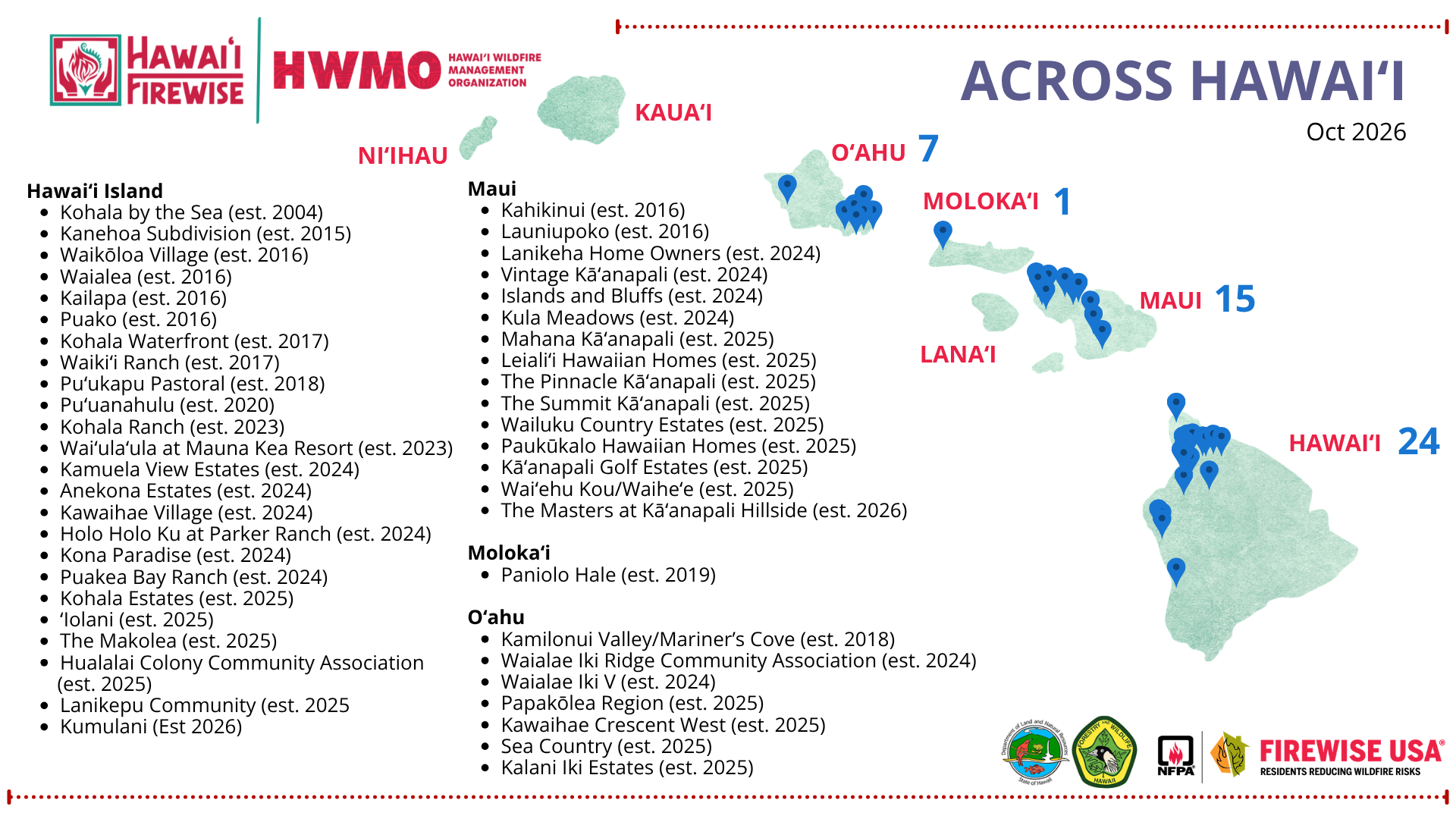
From 2004 to 2014, Kohala-by-the-Sea was the only Firewise Community in the state. In July 2015, HWMO began working with communities statewide to help them achieve Firewise Community Recognition.
The recognition program is part of a nationwide effort of almost 3,000 neighborhoods (and counting) working towards a common goal: protecting the community from wildfire. Since 2015, HWMO and DLNR/DOFAW have assisted 41 communities on Hawaiʻi Island, Maui, Molokaʻi, and Oʻahu to help them achieve national Firewise Communities recognition.
Neighborhoods in process of earning national Firewise recognition:
Hawaiʻi Island
Wai`aka (started the process 2025)
Kūka`iau (started process 2025)
Luala`i (started process 2025)
Kumulani at Mauna Kea (started process 2025)
Maui
Kāʻanapali Hillside Homeowners Association (started process 2026)
Wailea Kialoa (started process 2026)
Oʻahu
Waiʻanae Valley (started process 2025)
Nānākuli (started process 2025)
Hawaii Loa Ridge (started process 2025)
Waiʻalae Ridgeline Estates Association (started process 2026)
Molokai
Kalamaʻula Homestead (started process 2025)
Naiwa Agricultural Subdivision Alliance (NASA) (started process 2025
Community Mitigation Funding for Firewise Communities
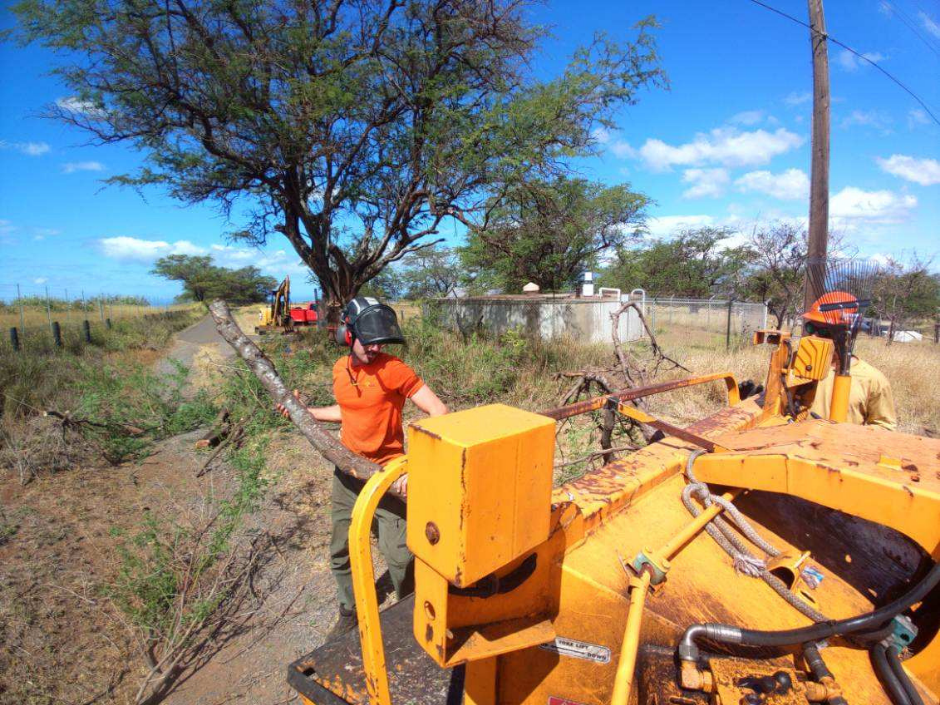
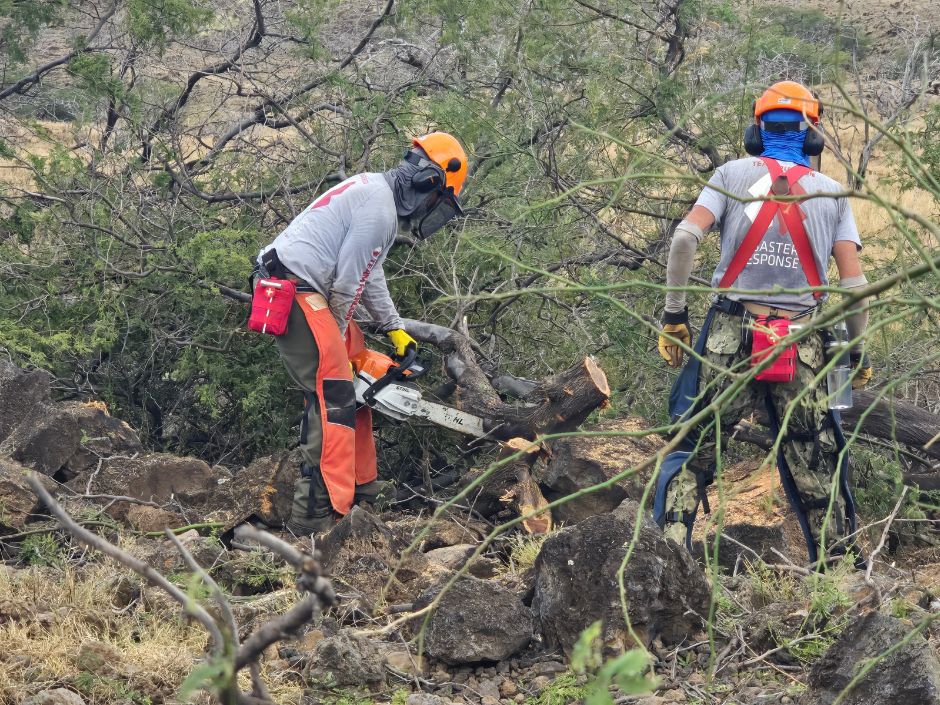
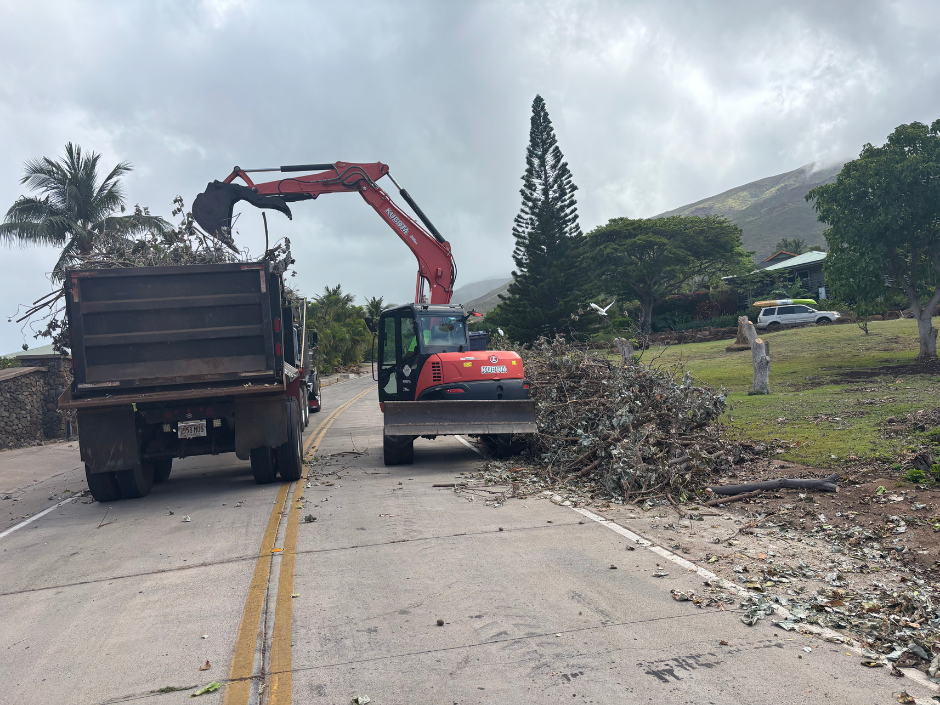
HWMO supports Firewise USA® communities across Hawaiʻi with funding to carry out locally driven wildfire risk reduction projects. Through the Firewise Community Mitigation Cost-Share Program, communities are able to take action on shared priorities such as vegetation management, defensible space, home hardening, and community preparedness.
This work is supported by Hawaiʻi State Legislature funding administered through the Department of Land and Natural Resources Division of Forestry and Wildlife. This investment enables Firewise communities to implement on-the-ground mitigation projects that reduce wildfire risk and strengthen community resilience.
Each year, HWMO works with Firewise site leaders to identify community mitigation needs and support projects that reflect local conditions and priorities.
Explore the Spring 2026 Firewise Mitigation Cost-Share Program Report
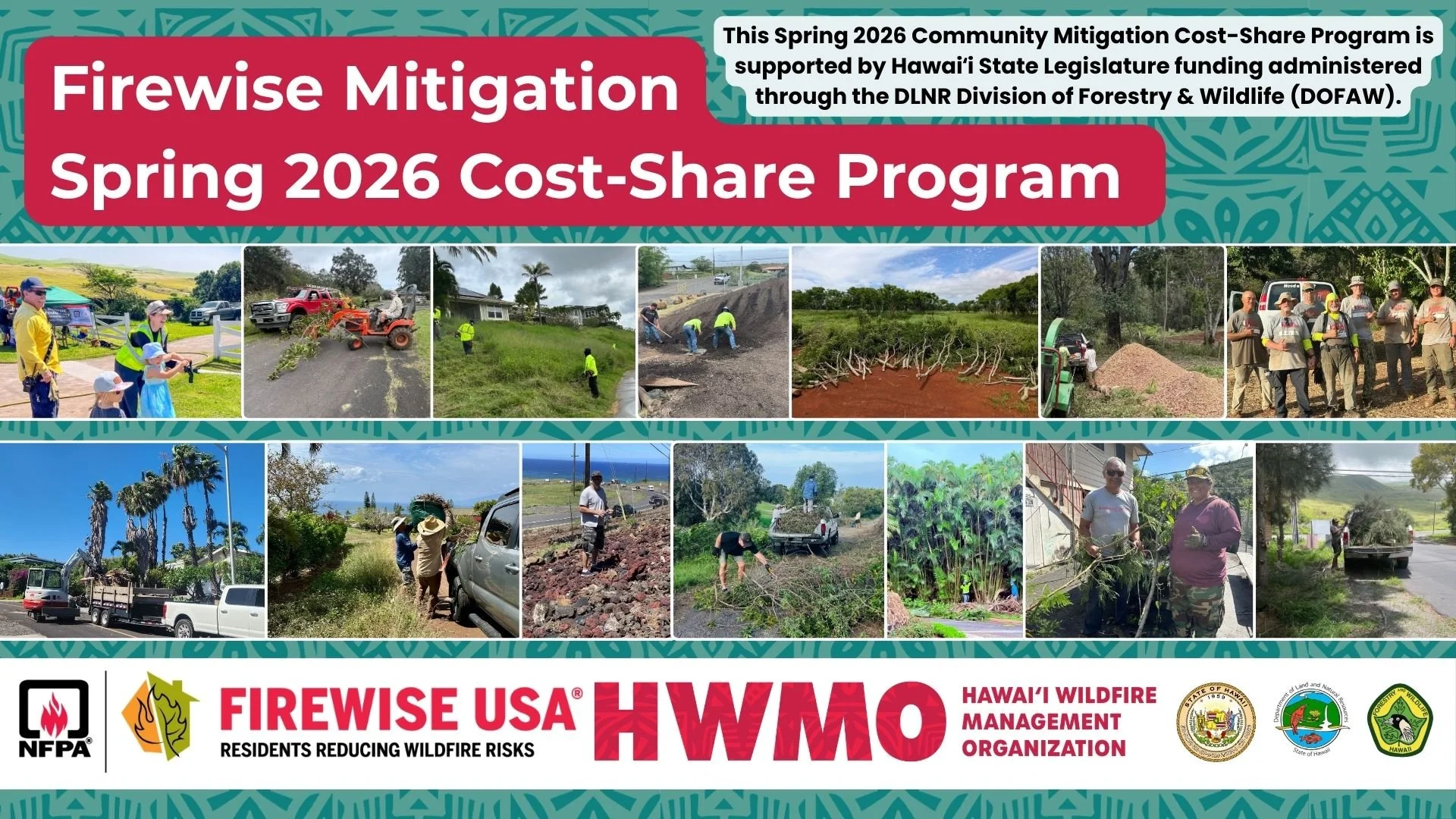
See how Firewise communities across Hawaiʻi are reducing wildfire risk through locally led mitigation projects supported by the Spring 2026 Community Mitigation Cost-Share Program. This report showcases 46 Firewise communities and two community groups that completed projects ranging from hazardous vegetation removal and home hardening to defensible space improvements and community education. Together, these efforts engaged hundreds of volunteers, removed thousands of cubic yards of wildfire fuels, and strengthened community resilience statewide. Download the full report to explore these success stories and see how collaboration is making Hawaiʻi safer and more wildfire ready.
Community Mitigation Projects
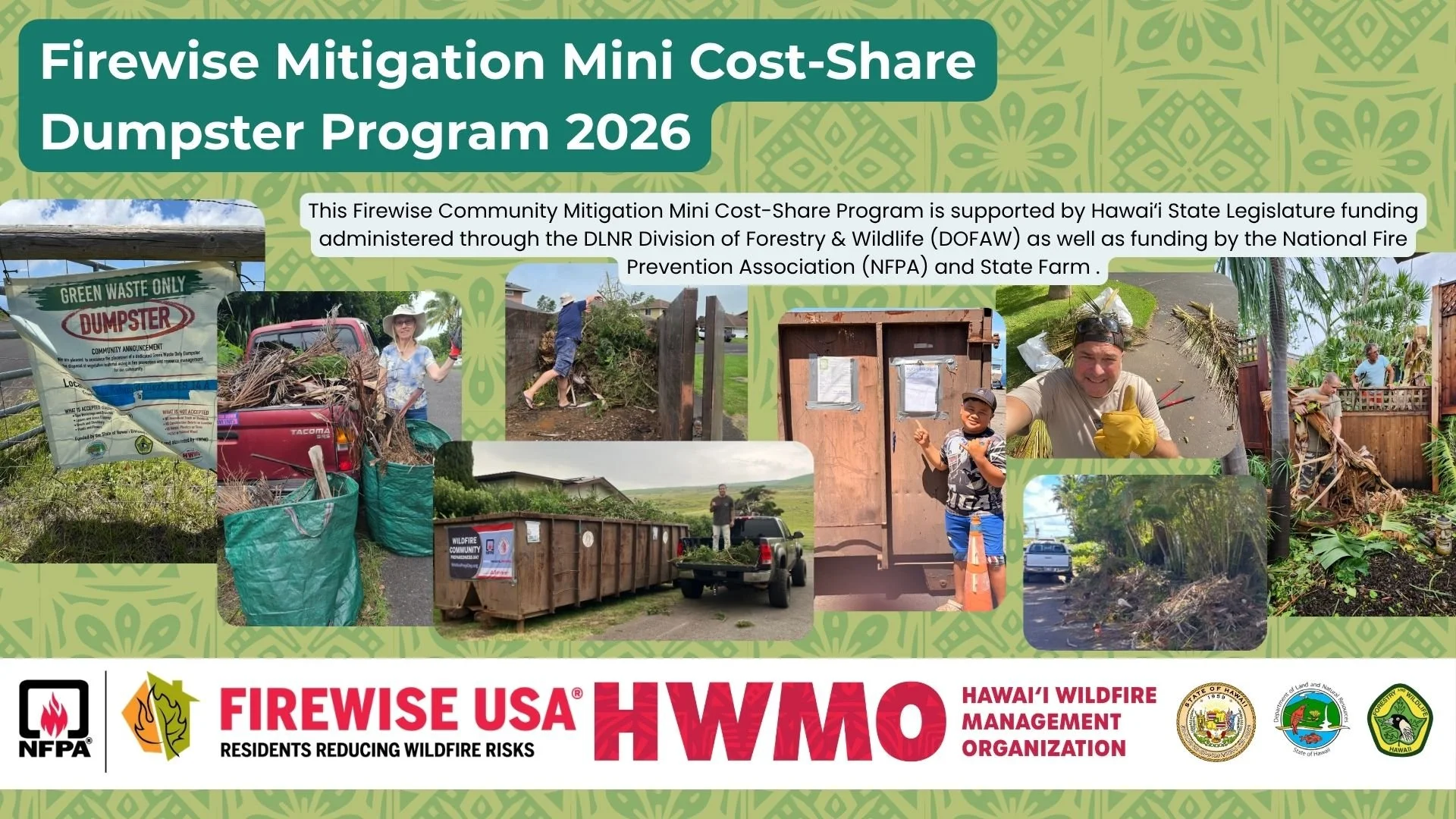
Explore the 2026 Firewise Mitigation Mini Cost-Share Dumpster Program Report
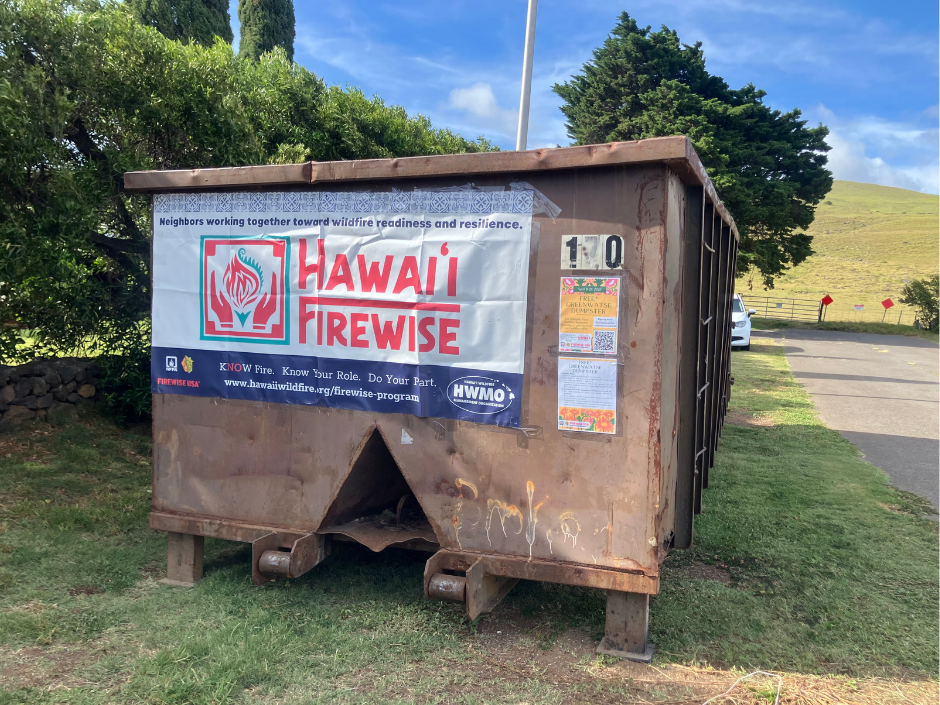
See how Firewise communities across Hawaiʻi are reducing wildfire risk through the 2026 Firewise Mitigation Mini Cost-Share Dumpster Program. With $27,380 in grant funding, 16 Firewise communities worked together to remove hazardous vegetation and combustible materials from their neighborhoods. These efforts contributed an estimated 1,500 volunteer hours and removed approximately 1,200 cubic yards of wildfire fuels. By making vegetation disposal more accessible, the program helped residents take meaningful action to protect their homes, reduce wildfire risk, and strengthen community resilience. Download the full report to explore these projects, see before-and-after photos, and learn how communities are working together to make Hawaiʻi safer and more wildfire ready.
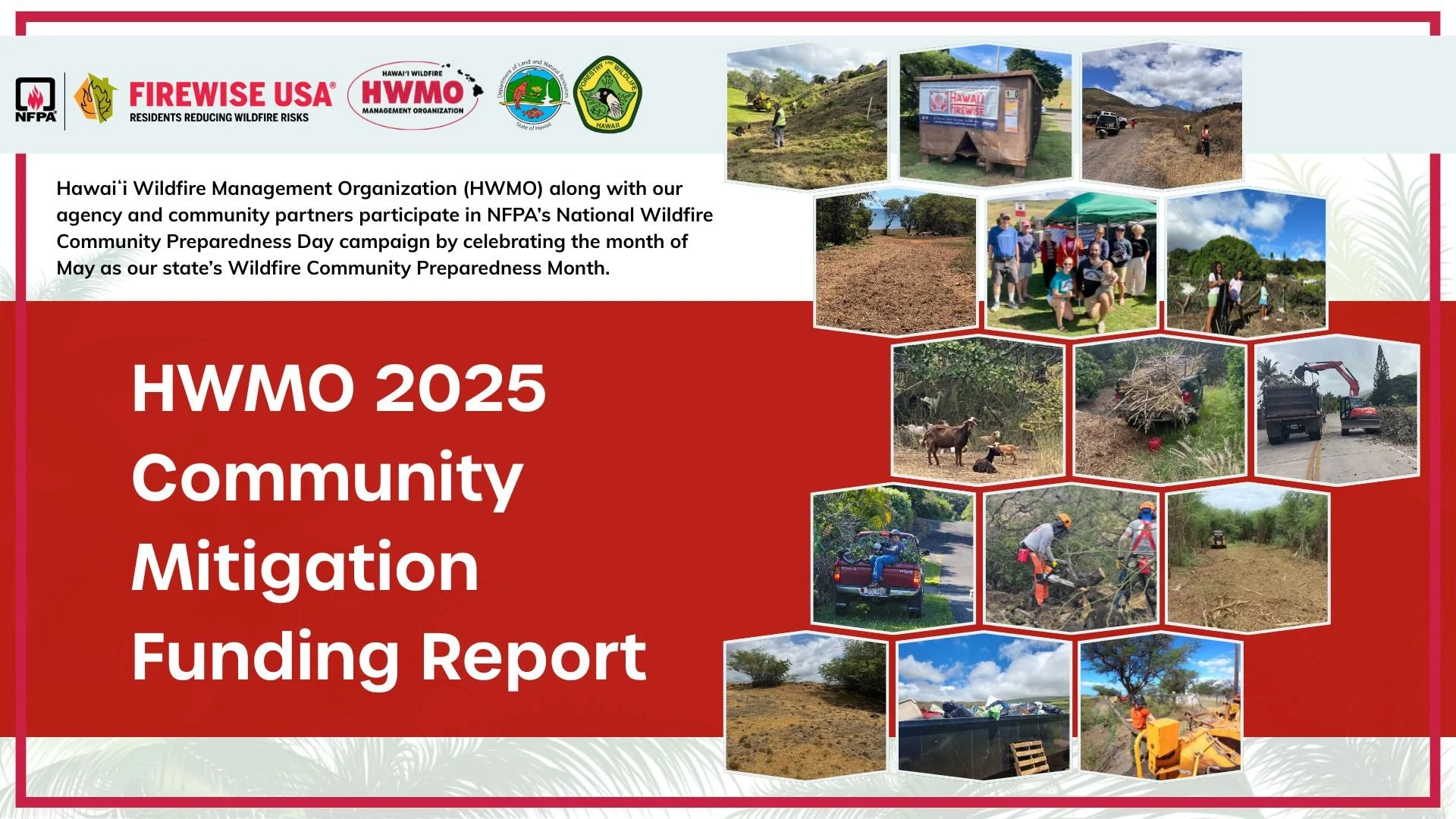
Explore the 2025 Wildfire Community Mitigation Funding Report
See how communities across Hawaiʻi are taking action to reduce wildfire risk through hands-on mitigation projects. This report highlights over 30 Firewise communities and their efforts to remove hazardous vegetation, create defensible space, and strengthen evacuation routes. With support from national and local partners, these projects are making our homes and neighborhoods safer. Download the full report to learn more and get inspired to take action in your area.

Explore the 2024 Wildfire Community Mitigation Funding Report
This report highlights wildfire mitigation projects completed by Hawaiʻi Firewise communities during the summer of 2024 with support from Hawaiʻi Wildfire Management Organization, NFPA, State Farm, and the US Forest Service. It documents hands-on, community-led efforts carried out during the dry months of May, June, and July, including hazardous fuel reduction, invasive species removal, defensible space improvements, and wildfire preparedness outreach.
Learn more with our virtual workshop recordings


Learn more with our infographic resources

Be Prepared for Wildfire

Lean, Clean, and Green

Tips for Firewise Landscaping